

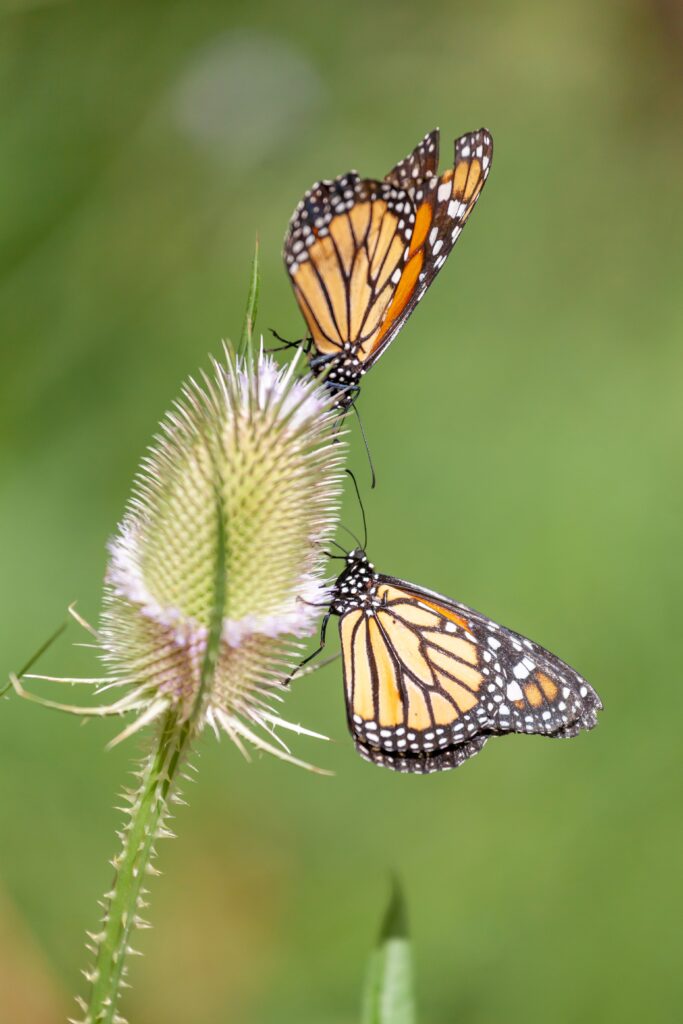
1. Choose a Sunny Spot
Butterflies love the sun! Pick a location that gets at least 6 hours of sunlight per day.
2. Plant Native Flowers
Choose nectar-rich, native plants to attract local butterflies. Aim for a mix that blooms from spring through fall.
Top Picks:
- Milkweed (monarchs’ favorite)
- Coneflower (echinacea)
- Black-eyed Susan
- Bee balm
- Lantana
- Zinnias
- Butterfly bush (non-invasive varieties)
3. Include Host Plants
These are where butterflies lay eggs and caterpillars feed.
Examples:
- Milkweed for monarchs
- Parsley, dill, fennel for swallowtails
- Violets for fritillaries
4. Add Water & Shelter
- Place shallow dishes with water and stones for perching.
- Include flat rocks for sunbathing.
- Add shrubs or tall grasses for wind protection and resting.
5. Skip the Pesticides
Pesticides and herbicides can harm butterflies at all life stages. Go organic!
6. Keep it Blooming
Plant in groups and include a variety of colors and heights to mimic natural habitats. Deadhead flowers to encourage continuous blooming.
🌼 Bonus Tips:
- Add a butterfly ID guide or signage for fun.
- Use mulch to retain moisture and reduce weeds.
- Want to include kids? Add a DIY butterfly feeder!
Try building your own butterfly garden using Kiefer Landscaping tips!